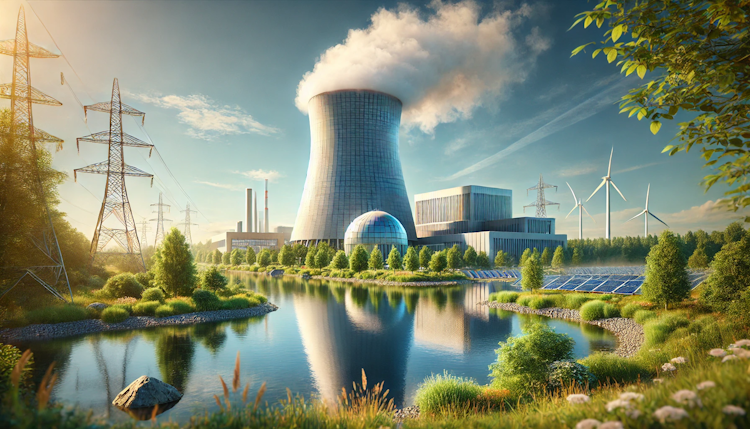
Why Nuclear, and Why Now?
At the heart of the nuclear pivot lies the skyrocketing energy consumption of generative AI—the technology behind text and media creation platforms like ChatGPT. AI systems learn from massive datasets and continuously process queries from millions of users. According to climate lead Sasha Luccioni of AI company HuggingFace, a single ChatGPT query may use as much electricity as lighting a bulb for 20 minutes.
Given the exponential uptick in AI queries—ranging from chatbots and image generators to sophisticated corporate tools—tech companies require a massive, consistent power supply. Nuclear proponents argue that SMRs, which produce less power than conventional reactors but can run reliably 24/7, represent the ideal clean power source for data centers that must operate around the clock.
“The use of nuclear reactors is almost like an ideal energy source,” says Jacopo Buongiorno, director of MIT’s Center for Advanced Nuclear Energy Systems. “Once you have built it and amortized it, the marginal costs are relatively low and the supply is constant.”
The Promise of Small Modular Reactors
Unlike traditional nuclear power plants, small modular reactors are designed to be safer and quicker to build. Their smaller size also lowers the risk of catastrophic incidents, supporters say, and incorporates “passive safety systems” that shut the reactor down without human intervention in emergencies.
The tech sector sees SMRs as a nimble way to meet evolving demands. Google’s Kairos Power project intends to deliver 500 megawatts by 2030, with Amazon’s X-Energy plan targeted for 2039. Microsoft’s Three Mile Island reboot is slated for 2028, pending regulatory approval. Meanwhile, Ontario Power Generation (OPG) in Canada is already building an SMR at its Darlington site, aiming to be North America’s first operational unit by 2029.
Critics: “Slow Down and Get the Facts Straight”
However, not everyone is onboard. Luccioni cautions that the Silicon Valley “move fast and break things” mantra does not translate well to the high-stakes world of nuclear energy. She’s concerned that big tech’s haste could overshadow crucial questions about cost, safety, and long-term waste management.
She also questions whether tech companies should be ramping up new energy sources without first trying to reduce energy consumption. She suggests:
Transparent Energy Disclosures: Companies must publicly release data on their AI systems’ energy requirements.
User Choice: People should be able to opt out of certain AI services, effectively curbing demand.
Regulatory Measures: Governments could set standards and limit AI’s energy usage until sustainable infrastructure is firmly in place.
“There’s going to be a couple of years when demand is outstripping any kind of renewable energy supply,” Luccioni notes, pointing to the risk that AI could simply outpace the growth of wind, solar, and other alternatives—leaving nuclear as the only scalable fallback for round-the-clock power.
Balancing Innovation and Responsibility
For many observers, the investments by Microsoft, Google, and Amazon suggest a hopeful turn toward clean, carbon-free energy. Nuclear, after all, does not emit greenhouse gases during operation—making it a potentially crucial player in meeting net-zero targets. By diversifying their energy sources, tech companies have also taken steps toward geothermal, wind, and solar projects around the globe.
Yet the broader debate remains: Should the world lean on a technology as complex as nuclear to satisfy near-limitless AI ambitions? As these companies place billion-dollar bets, their success or failure will shape not only AI’s carbon footprint but also the public’s acceptance of a new generation of nuclear technology.